Eczema is a group of skin diseases:
Atopic dermatitis:
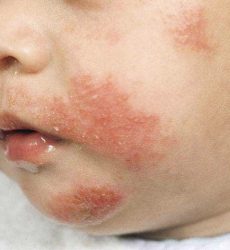
Atopic dermatitis (AD) is a chronic, pruritic inflammatory skin disease that usually affects the face (cheeks), neck, arms, and legs. It usually begins in early infancy, but also affects a significant number of adults. It is usually associated with high levels of immunoglobulin E.
Symptoms:
Persistent itching is one of the symptoms of AD. This disease usually has an alternating period with relapses and remissions. It is created as dryness and red and scaly lesions that can be mild and limited or severe and extensive. Most children with atopic dermatitis have parents with skin sensitivity or runny nose.
Treatment:
About 60% of children with atopic dermatitis recover by age 12. Treatment includes the following:
- Moisturizing creams
- Topical corticosteroids
- Systemic drugs
Contact dermatitis:
Contact dermatitis is an acute or chronic skin inflammation caused by skin contact with a chemical, biological or physical agent. Contact dermatitis occurs after one or more contact with an allergen.
Irritant contact dermatitis (ICD) is caused by direct tissue damage following contact with a known irritant. In contrast, in allergic contact dermatitis, tissue damage by the allergen is mediated through immunologic mechanisms. A complete history if contact at home, at work, and in recreational activities, it is essential to diagnose and identify the causative agent. The severity of contact dermatitis ranges from a mild, short-term condition to a severe, persistent, job-threatening, and possibly life-threatening illness.
Treatment of irritant contact dermatitis Allergic contact dermatitis begins with the removal of the offending substance.
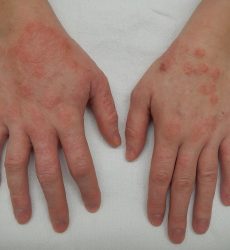
Irritant contact dermatitis (ICD) is a non-specific and non-allergic response of the skin to direct chemical damage caused by an injurious agent that releases inflammatory mediators mainly from epidermal cells. Irritant contact dermatitis can be acute or chronic. Stimulants such as Hand soap causing irritant dermatitis in a hospital worker or exposure to hydrofluoric acid in a chemical plant. Acutely, this inflammation presents with redness, erythema, mild edema, and scaling. Irritant contact dermatitis. Chronic inflammation appears with darkening, scarring of the skin, fissures or ulcers.
Hands are the most important site of irritant contact dermatitis. Irritant contact dermatitis is caused by repeated exposure of hands to water and soaps, cleaners, solvents and detergents.
The treatment of irritant contact dermatitis includes the identification and elimination of any causative factors. For irritant contact dermatitis of the hands, advise people to use ceramide-containing creams or mild emollients after washing hands with soap and before going to bed.
Acute contact allergic dermatitis:
Acute allergic contact dermatitis characterized with pruritic papules and vesicles on an inflamed, pruritic base.
People with allergic contact dermatitis usually present during a few days of exposure to the allergen. However, some allergens (eg, neomycin) penetrate intact skin well.
Occasionally, the onset of dermatitis may be delayed up to a week after exposure.
Treatment:
The definitive treatment for allergic contact dermatitis is to identify and eliminate any potential triggers. otherwise, the patient is at risk of chronic or recurrent dermatitis